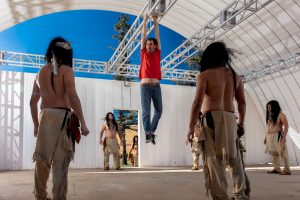
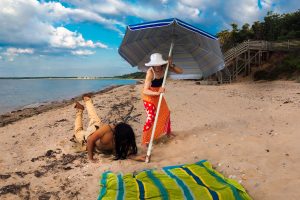
Hallock Site, 2016

$800.00

2016
Archival Inkjet Print
18 x 24 inches
Edition 3/10
Inventory 425

In stock

View in Room

SKU: 425 Categories: , Tag:

Description

Hallock Site, currently on view in
Living Conduit – Indigenous History and Present Day, South Ocean Gallery at South Nassau Unitarian Universalist Congregation, Freeport, NY, October 3, 2026 – November 21, 2026

The Hallock Site lies within the Corchaug homeland on Long Island's North Fork. Associated with a seventeenth-century village and stone-working, it records Native labor and community life in a region now commonly described through colonial settlement and later property ownership. Making a stone tool required knowledge of materials, skilled hands, and repeated practice. The surviving evidence belongs to a history of people feeding households, working, teaching, and maintaining a home.

An archaeological site is also a place of relationships. Objects removed from the ground can become museum specimens or private possessions, separated from the communities whose history gives them meaning. Protecting this place means keeping its deposits undisturbed and recognizing Native communities as authorities in the care and interpretation of their heritage. Its name, Hallock, also reveals how a later family name can become more publicly familiar than the Native lives associated with the land.

The seventeenth century was a period of colonial expansion on the North Fork. Reading Native places only through their encounters with settlers makes village life appear secondary to someone else's beginning. Here, the starting point is the community already present and the knowledge required to sustain it. Archaeological traces do not mark the moment Native people ceased to exist; they record particular activities at a particular place. Corchaug history belongs within Long Island's continuing Native history, where family connections and community memory extend beyond the boundaries of an excavated site. Respect includes leaving materials in place and supporting interpretation in which descendants have a voice.

View in Room

Approximate scale using a 72 inch sofa.

Artwork: 24 x 18 inches
Reference couch: 72 x 34 inches, a typical two-person sofa

Exhibited & Provenance

Exhibition history and artist-direct provenance.

Living Conduit – Indigenous History and Present Day

South Ocean Gallery at South Nassau Unitarian Universalist Congregation, Freeport, NY, October 3, 2026 - November 21, 2026

Encoded Landscapes 2026

March 30, 2026 - May 19, 2026

JohnJermainLibrary July2025

July 19, 2025 - August 25, 2025

Description

Hallock Site, currently on view in
Living Conduit – Indigenous History and Present Day, South Ocean Gallery at South Nassau Unitarian Universalist Congregation, Freeport, NY, October 3, 2026 – November 21, 2026

The Hallock Site lies within the Corchaug homeland on Long Island's North Fork. Associated with a seventeenth-century village and stone-working, it records Native labor and community life in a region now commonly described through colonial settlement and later property ownership. Making a stone tool required knowledge of materials, skilled hands, and repeated practice. The surviving evidence belongs to a history of people feeding households, working, teaching, and maintaining a home.

An archaeological site is also a place of relationships. Objects removed from the ground can become museum specimens or private possessions, separated from the communities whose history gives them meaning. Protecting this place means keeping its deposits undisturbed and recognizing Native communities as authorities in the care and interpretation of their heritage. Its name, Hallock, also reveals how a later family name can become more publicly familiar than the Native lives associated with the land.

The seventeenth century was a period of colonial expansion on the North Fork. Reading Native places only through their encounters with settlers makes village life appear secondary to someone else's beginning. Here, the starting point is the community already present and the knowledge required to sustain it. Archaeological traces do not mark the moment Native people ceased to exist; they record particular activities at a particular place. Corchaug history belongs within Long Island's continuing Native history, where family connections and community memory extend beyond the boundaries of an excavated site. Respect includes leaving materials in place and supporting interpretation in which descendants have a voice.

Artwork Details
Title: Hallock Site
Year: 2016
Medium: Archival Inkjet Print
Size: 18 x 24 inches
Edition: 3/10

Shop

Browse print editions, framed works, mounted works, and books.

Back to all products

Cart